
Most home emergencies do not feel dramatic at first. It is a soft drip you do not hear, a hose that starts to seep behind the washer, or a water heater that fails while you are asleep. You notice it later, when you step onto damp flooring, open a cabinet to find swollen wood, or return from a weekend away to the smell of moisture.
That is why water protection belongs in the same conversation as home security. A water leak detector or water leak sensor can catch water damage early, often before it turns into warped floors, mold, drywall repairs, and a long remodel. When leak sensors are integrated into a broader alarm platform, they help protect your home even when you are busy, asleep, or away.
What is a water leak detector?
A water leak detector is typically a small device that detects water where it should not be and then triggers an alert. Depending on the system, that alert may be an audible alarm, a push notification, or both. Many homeowners refer to these devices as water leak detectors, water sensors, or water alarms.
When leak sensors are integrated into a broader security platform, the experience is often smoother. You get one app, consistent alert rules, and the option to connect leak detection to other automation and security features.
What is a water leak sensor alarm system?
A water leak sensor alarm system is a leak detection setup that is tied into a home security or smart home alarm platform. It typically includes one or more leak sensors placed near likely risk areas, such as a water heater, laundry hookups, or under a sink. When a sensor detects water, the system can trigger a local alarm and send notifications to your phone. Some configurations can also include professional monitoring response.
Some homes also add whole home water monitoring that watches water flow patterns and can flag abnormal usage. In certain setups, a smart water shutoff valve can reduce damage by stopping water at the source.
Why water sensors are a security upgrade, not just smart home tech
Traditional security focuses on intruders. Water protection focuses on time.
Most major water damage gets worse because it goes unnoticed, especially when it starts slowly. The advantage of a leak detection system is speed. A fast alert gives you a fast response. That can mean shutting off water, contacting a neighbor, calling a plumber, or stopping a small leak from becoming a major loss.
Where leaks commonly start
Most leak problems tend to cluster around a few areas. Water heaters, washing machines, dishwashers, refrigerators with icemaker lines, toilets, and bathroom sinks are frequent sources. HVAC condensate lines and pans can also create surprises, particularly when they clog or overflow.
Water leak detector options and how to choose
Point leak and flood sensors are usually the best first step. These are small sensors placed on the floor, in a drip pan, or near plumbing connections. They work well under sinks, beside toilets, near water heaters, and in laundry rooms.
Flow-based water monitors provide broader coverage by detecting unusual water use patterns. This option can be especially useful if you travel often, have a second home, or simply want a wider safety net.
Smart shutoff valves add an extra layer by stopping water at the source. Some systems can shut off the main supply automatically when a leak is detected, which can reduce damage when you cannot respond immediately.
Where to place water leak sensors for maximum impact
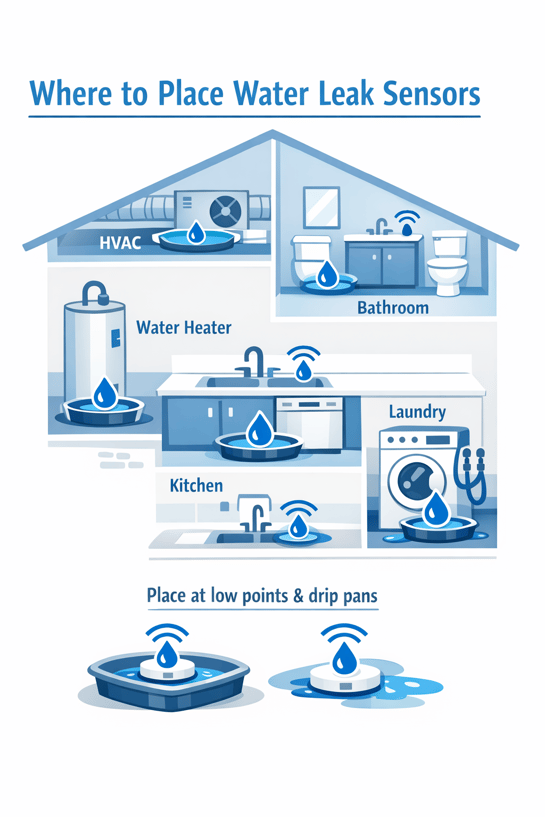
If you are starting small, aim for the highest-risk zones first. The water heater area is usually a top priority, including inside or near the drip pan. The kitchen sink zone is another strong candidate, especially near the dishwasher. Laundry areas deserve attention because hose failures can release a lot of water quickly. Bathrooms are also common trouble spots, particularly near toilets and under-sink supply lines. If your HVAC system has a condensate pan or drain line in an attic or closet, that is another smart location to protect.
A helpful rule is to place the sensor where water will reach first. Low points and drip pans are usually more reliable than placing a sensor on a shelf or behind stored items.
What to look for in a smart water leak detector and alarm system
Start with alerts you will actually see. For water protection, notifications matter because leaks can happen any time, even when you are home and busy. Customizable notifications help you stay informed about the events you care about.
Next, consider monitoring and redundancy. If your system supports professional monitoring, you are not relying on noticing a single push notification. Redundancy also helps keep protection in place during outages or interruptions.
Finally, integration makes a difference. If your water leak detector lives inside the same app as your security system, cameras, and smart devices, you are more likely to respond quickly. One ecosystem helps keep important alerts from getting lost across multiple apps.
Quick setup checklist
Keep this simple if you want high impact quickly. Place sensors at the water heater, under the kitchen sink, and in the laundry area first. Turn on immediate notifications. Learn where your main shutoff valve is located. If you travel frequently, consider adding flow monitoring or a shutoff solution.
Common questions homeowners ask
Many homeowners wonder whether water leak detectors are still worth it if they are already careful. In most cases, they are, because a lot of leaks begin in places you do not routinely see, such as behind appliances, inside cabinets, or at slow-dripping supply lines. Water damage often becomes expensive when it is not detected early, so the real value is getting an alert quickly.
Another common question is whether one sensor is enough. For most homes, multiple sensors make more sense because water risk is spread out across several areas, including the kitchen, laundry, bathrooms, and near the water heater. Starting with a few sensors in the highest-risk locations typically provides the biggest impact.
People also ask whether leak sensors should be connected to their alarm system or kept as standalone devices. If you want leak protection to behave like real home protection, integration usually wins. Having alerts in the same app as your security system, with the option for monitoring depending on your setup, makes it easier to notice and respond fast instead of hoping you catch a single notification from a separate gadget.
Want KPS to help you add water protection to your system?
KPS offers water and flood sensors as part of its smart home security options. If you want a professionally installed setup tuned to your home and lifestyle, KPS can help you prioritize the right sensor locations and build a plan that fits.
Key takeaways
- A water leak detector or water leak sensor alarm system helps catch leaks early, before damage spreads.
- Water sensors protect against everyday risks, not just break-ins.
- Start with high-risk areas like the water heater, kitchen sink, and laundry room.
- Multiple sensors usually work better than relying on just one.
- Integrated alerts in one app make it easier to notice and respond fast.
- Monitoring and redundancy can add peace of mind when you are away or busy.
- Some insurers may offer discounts for water damage mitigation devices, depending on your policy.