- PCI DSS mandates that businesses processing payment data secure areas where sensitive cardholder data is stored.
- OSHA demands physical safety measures, especially in high-risk work environments.
- Local fire codes often require alarm system documentation and inspection history.
Each of these regulations has specific requirements for documentation, monitoring and access control. Failure to comply can result in penalties, lawsuits or business interruption.
How Integrated Security Systems Help
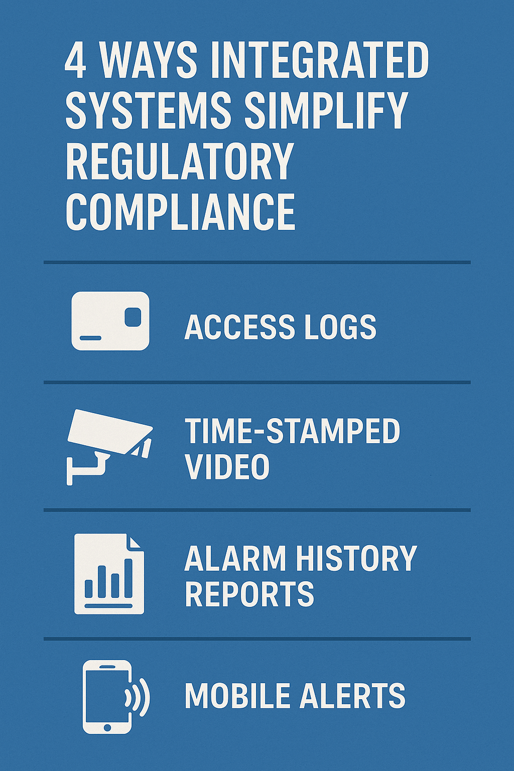
Smart, integrated systems bring multiple security functions into one platform. This simplifies compliance in several important ways:
Access Logs for Audits
Access control systems generate diRegulatory compliance is a reality for businesses in industries like healthcare, finance, cannabis, manufacturing and logistics. From physical access controls to detailed audit trails, maintaining compliance isn't optional. It’s essential for operating legally and avoiding fines or shutdowns.
Fortunately, modern integrated security systems make this responsibility far more manageable. By combining access control, video surveillance, alarm reporting and real-time alerts into a single platform, businesses can simplify their compliance efforts while improving their overall security posture.
Why Compliance Is More Demanding Than Ever
Regulatory bodies expect businesses not only to follow physical security protocols but to prove they’re doing so. This often means maintaining detailed logs, preserving video footage and responding quickly to security incidents. For example:
- HIPAA requires healthcare providers to control and track access to areas containing patient information.
gital logs of who entered specific areas and when. These logs are critical during compliance audits and reduce the need for manual sign-in sheets or disjointed recordkeeping. They also support better internal accountability.
Time-Stamped Video Footage
Video surveillance that’s tied to access events adds another layer of visibility. When a door is opened, the system can flag and store the corresponding footage, making it easy to retrieve during reviews or investigations.
Alarm and Event Reporting
Many compliance requirements call for clear records of alarm activity, including who responded and when. Integrated systems automatically generate these reports, keeping a searchable archive that supports inspections or incident reviews.
Mobile Alerts and Restricted Access Monitoring
Real-time alerts sent to mobile devices allow managers or compliance officers to act quickly when a security policy is violated, such as an unauthorized entry into a restricted area. This immediate visibility helps demonstrate diligence and proactive risk management.
A Smarter, More Defensible Approach to Compliance
The advantage of integration isn’t just convenience. It’s about having a security infrastructure that supports both your daily operations and your legal obligations. Instead of relying on disconnected tools or manual processes, an integrated system provides centralized control, reliable data and consistent enforcement of access policies.
Whether you're preparing for a regulatory inspection, aiming to improve audit readiness or simply looking to reduce risk exposure, an integrated system helps you stay ahead without adding complexity.
Interested in learning how integrated security could simplify your compliance strategy? Schedule a free consultation with KPS to explore options tailored to your industry requirements.
Key Takeaways
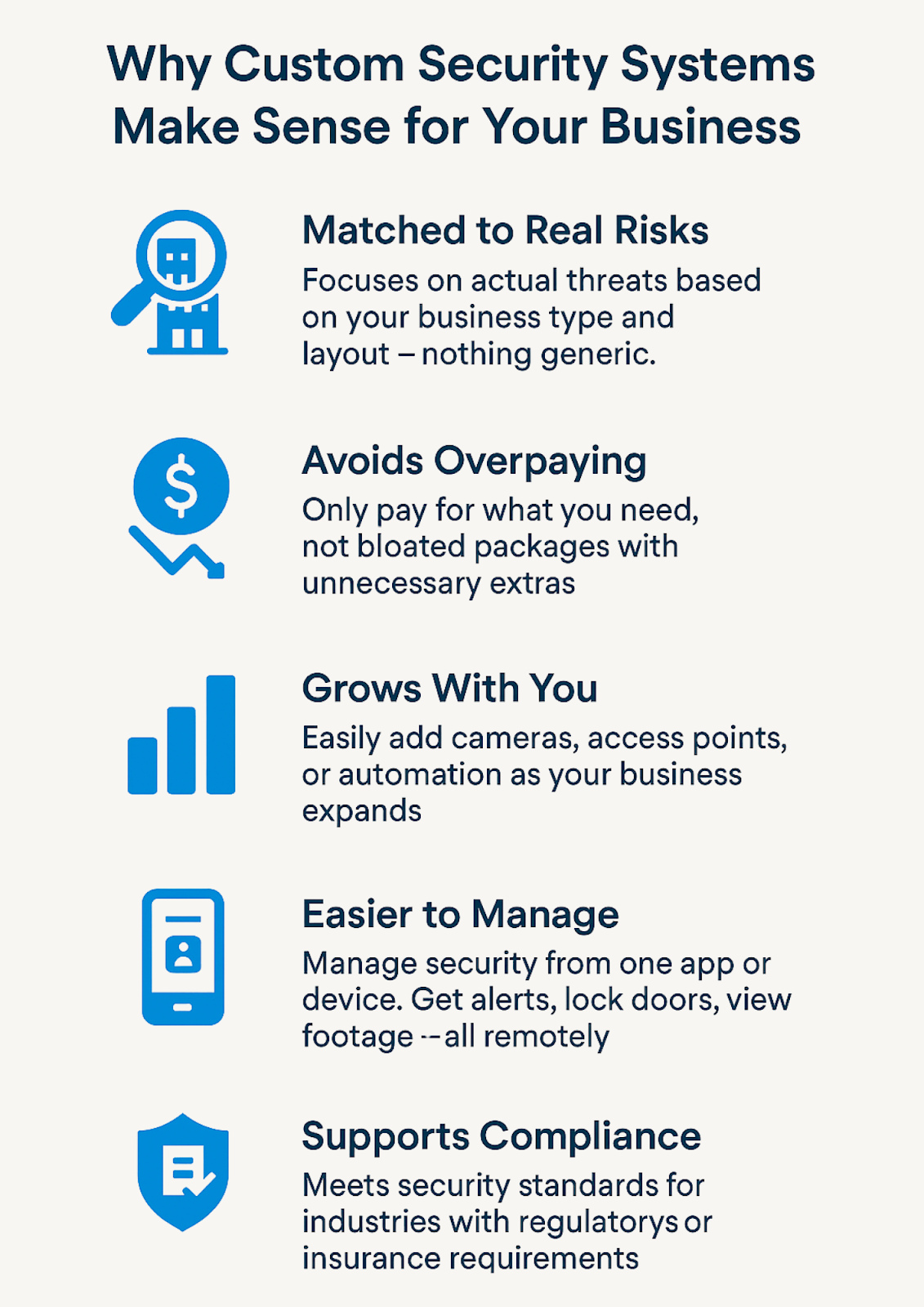
- Regulatory compliance requires strong physical security documentation and access control.
- Integrated systems simplify audits with automated logs and time-stamped video.
- Alarm reporting and real-time alerts improve response and accountability.
- These tools support compliance with standards such as HIPAA, PCI DSS, OSHA and fire codes.
- A centralized system reduces complexity while strengthening both security and compliance.